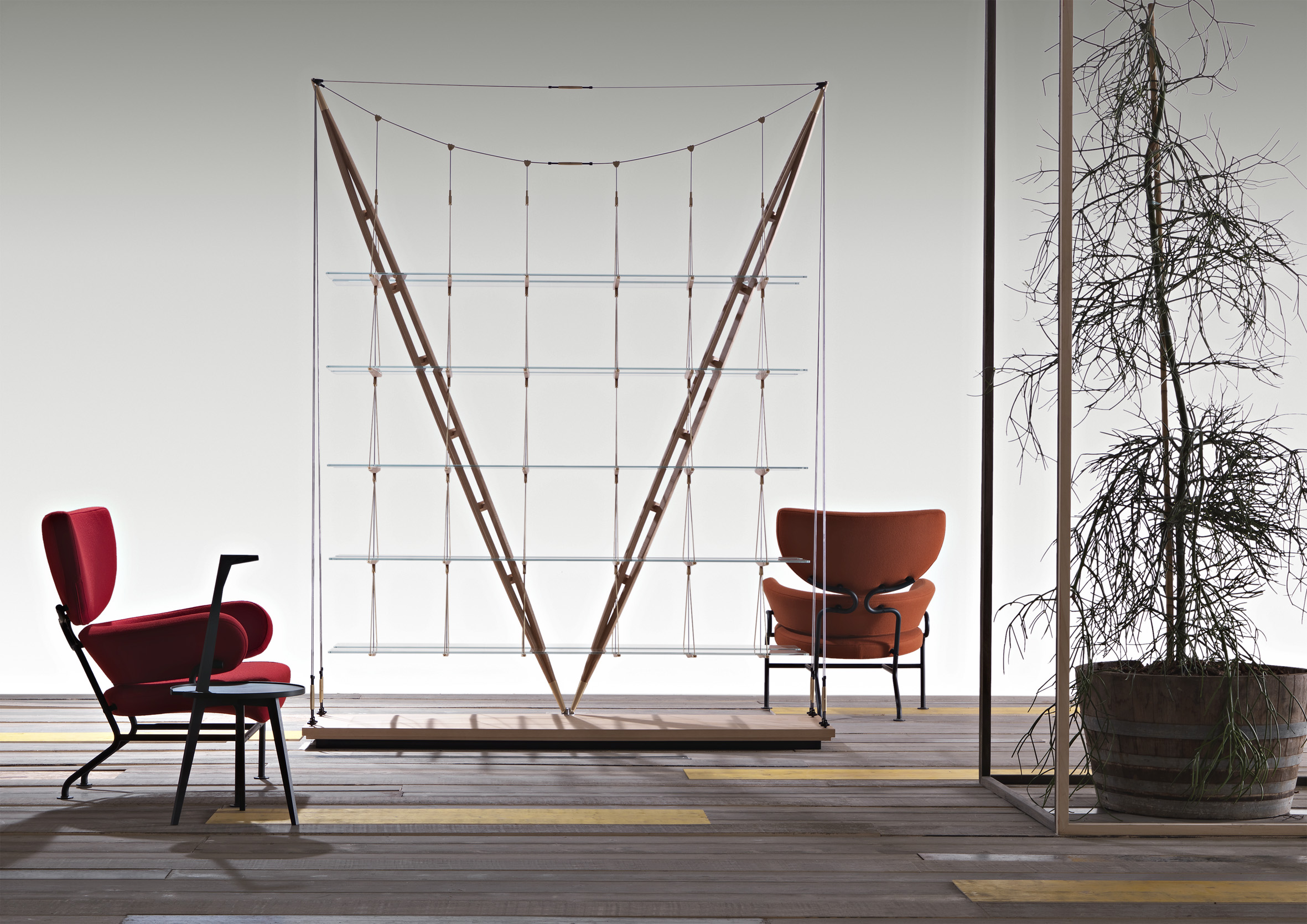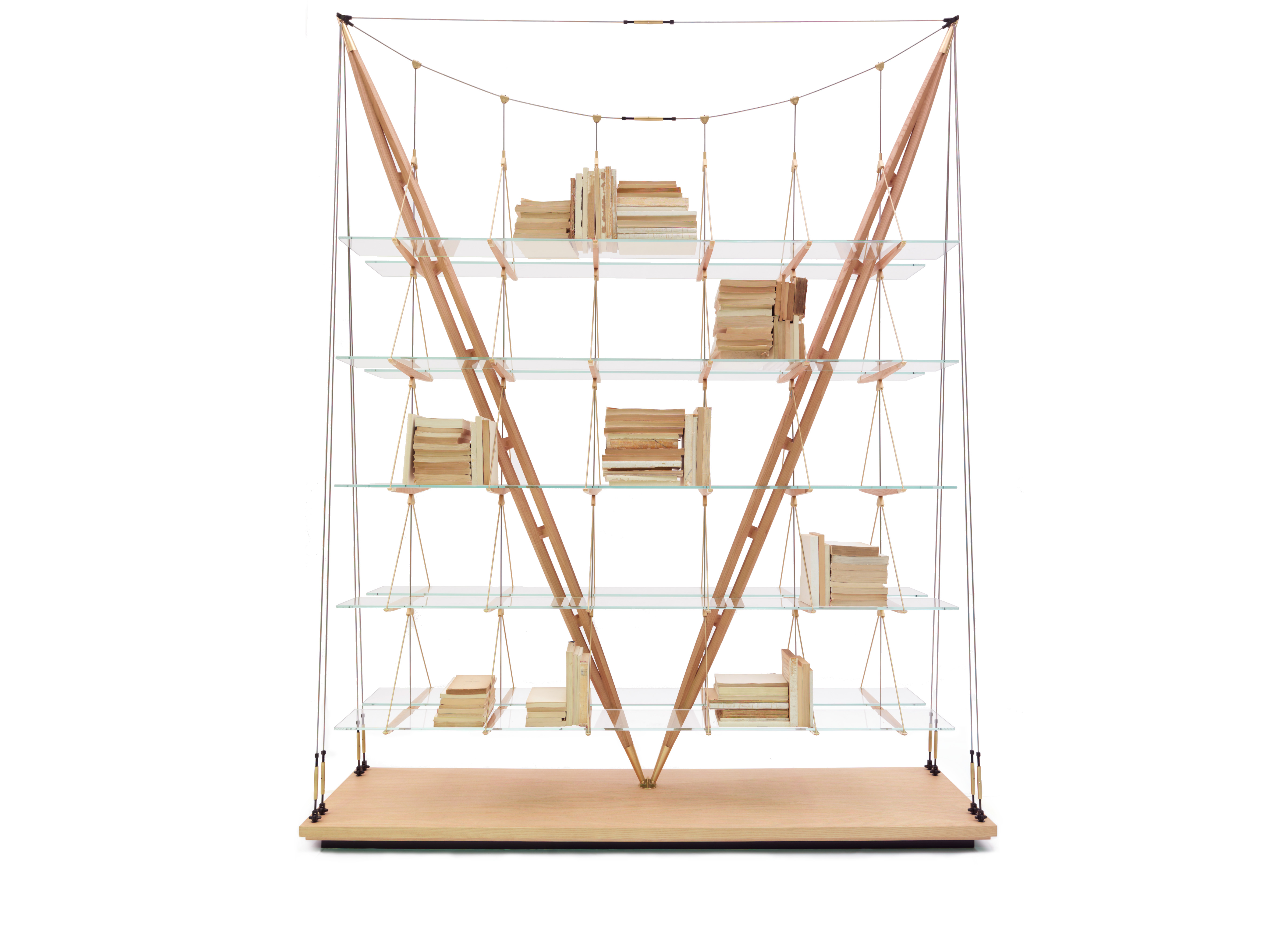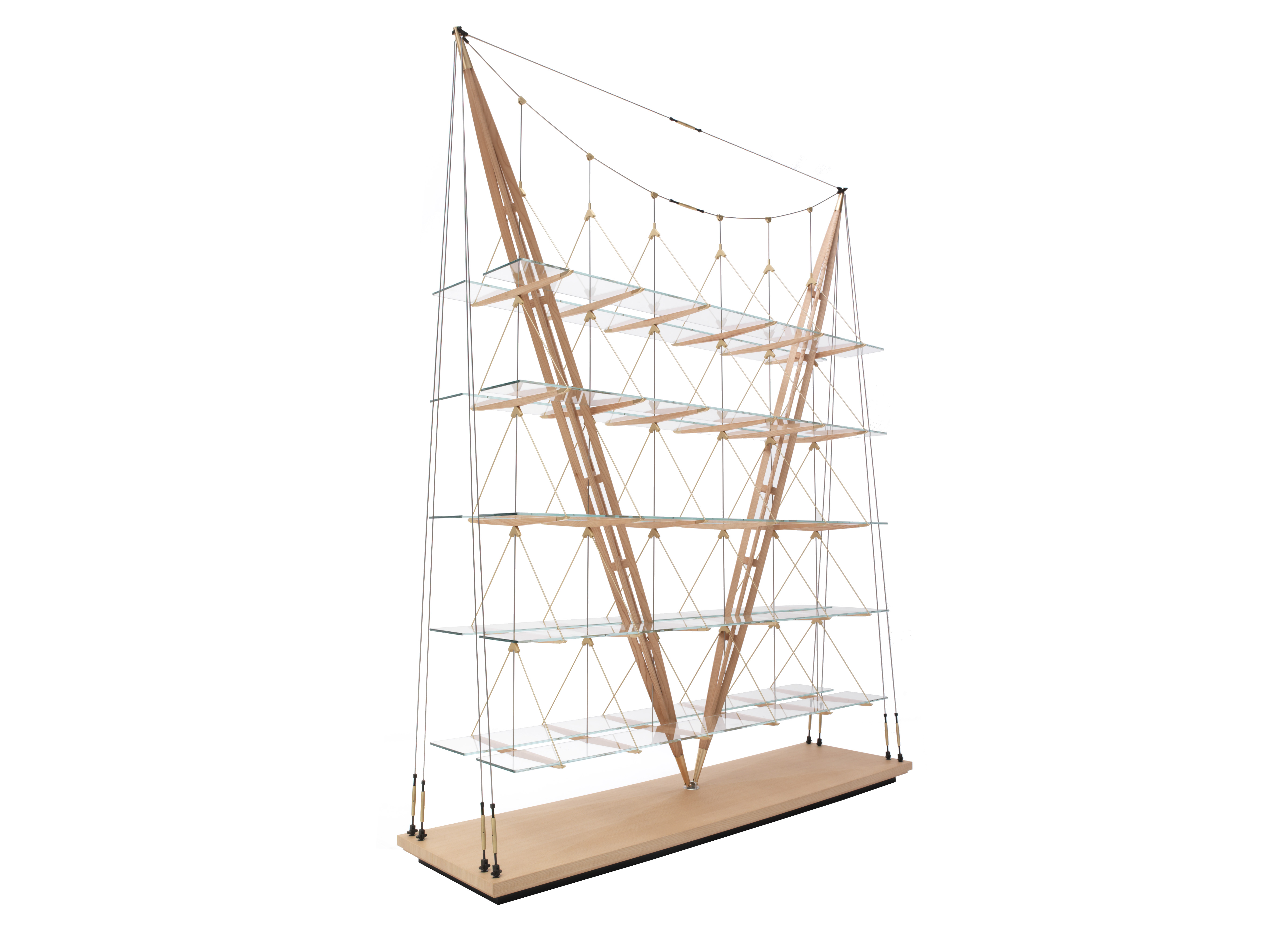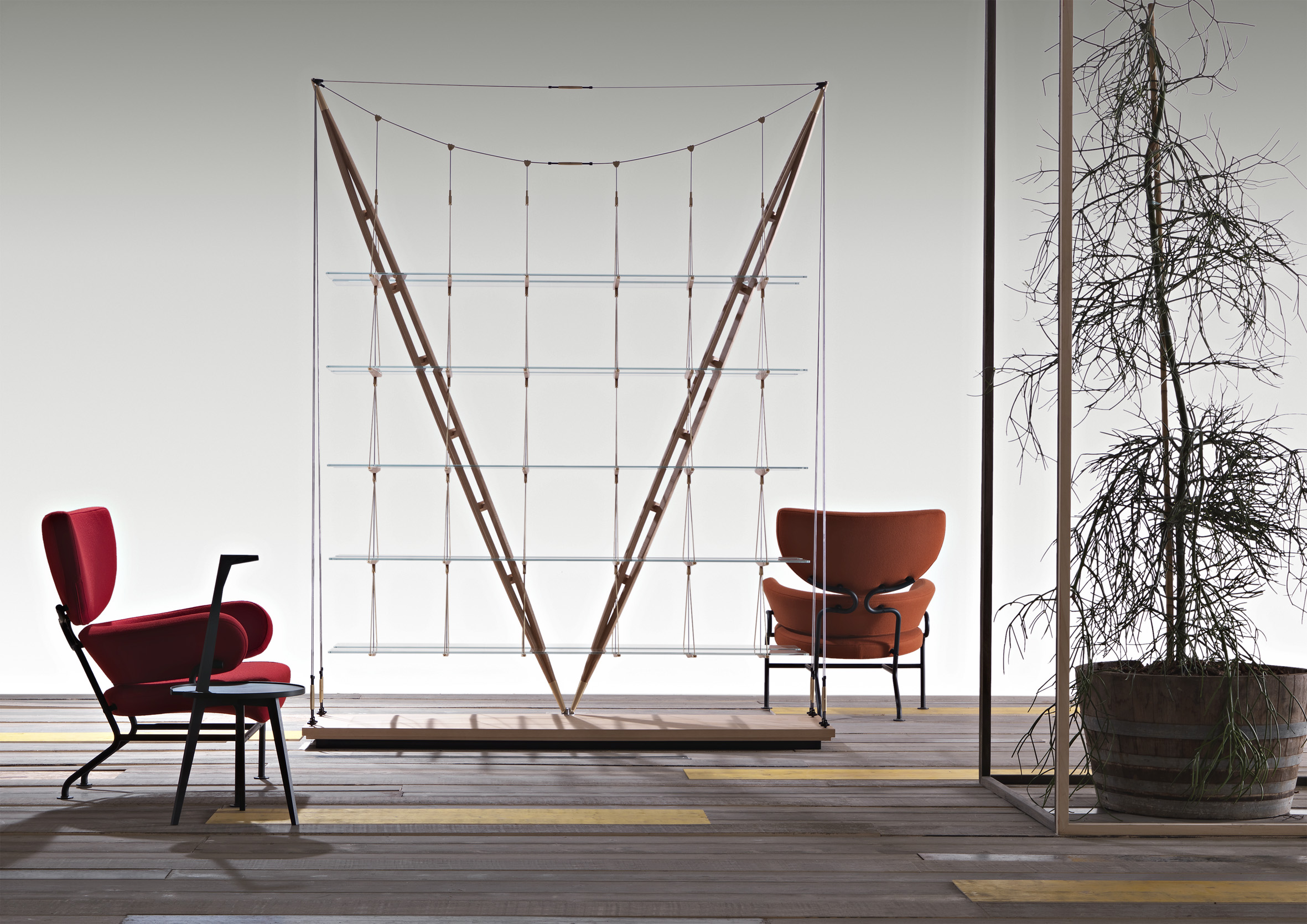









The company’s long research project restores stability to Franco Albini’s iconic bookcase. An audacious challenge to the laws of physics: “Veliero” is the legendary bookcase that Franco Albini designed and had made for his house in Via De Togni, Milan, as a one-off piece in 1940. A dream that has finally become reality thanks to the intense research carried out since 2006 by Cassina, which has now added “Veliero” to the Cassina I Maestri Collection. A result made possible by modern technologies and a highly complex research and reinterpretation project, developed through the involvement of: Giampiero Bosoni, design critic, historian and expert on the works of Franco Albini; the nautical engineering experts of Studio Brenta; various structural engineers from the fields of civil engineering. All with the specific objective of respecting the authentic spirit of a highly experimental project in all of its disarming linearity.
“Between visual instability and functional stability, between virtual movement and stasis”.
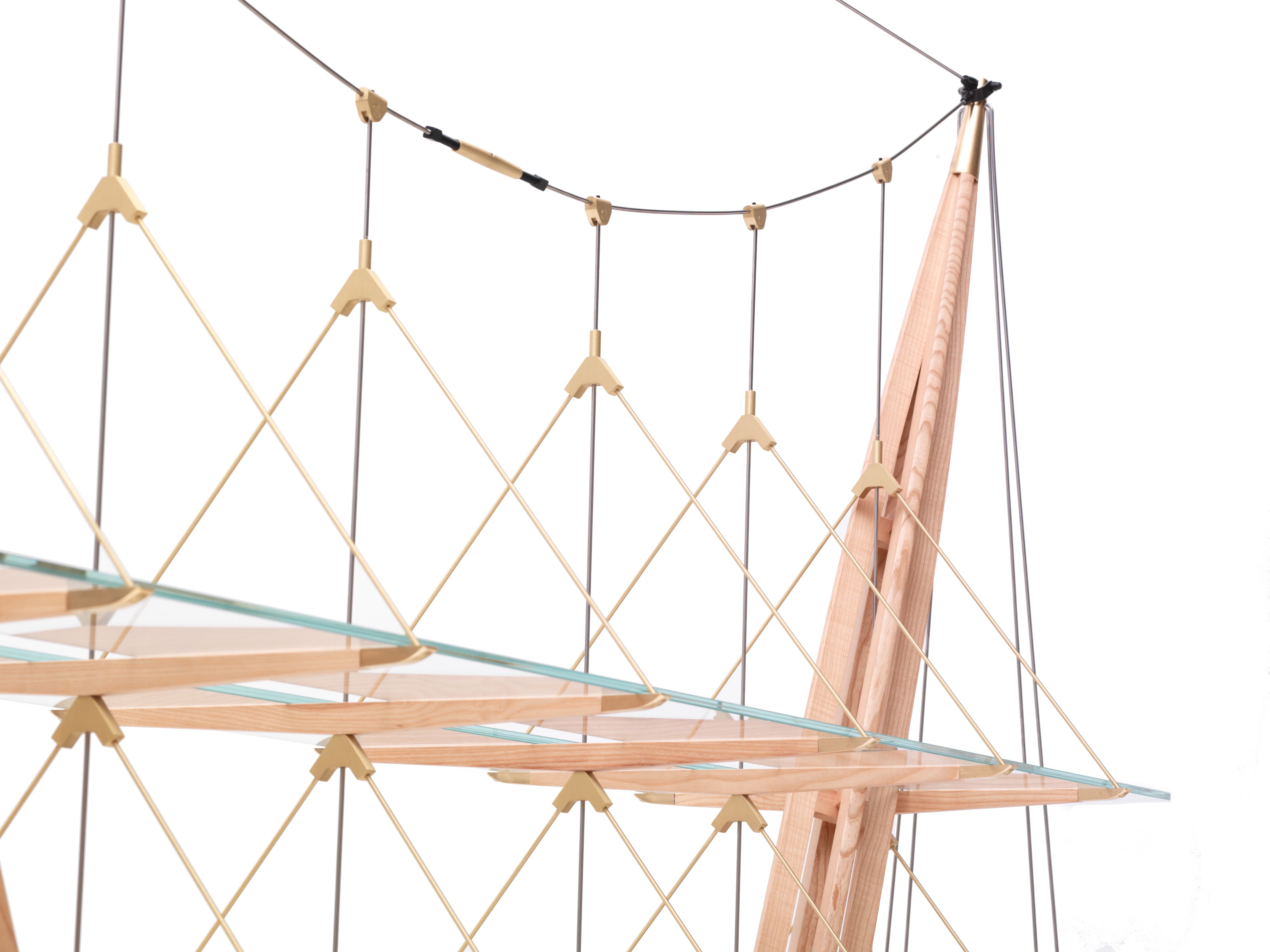
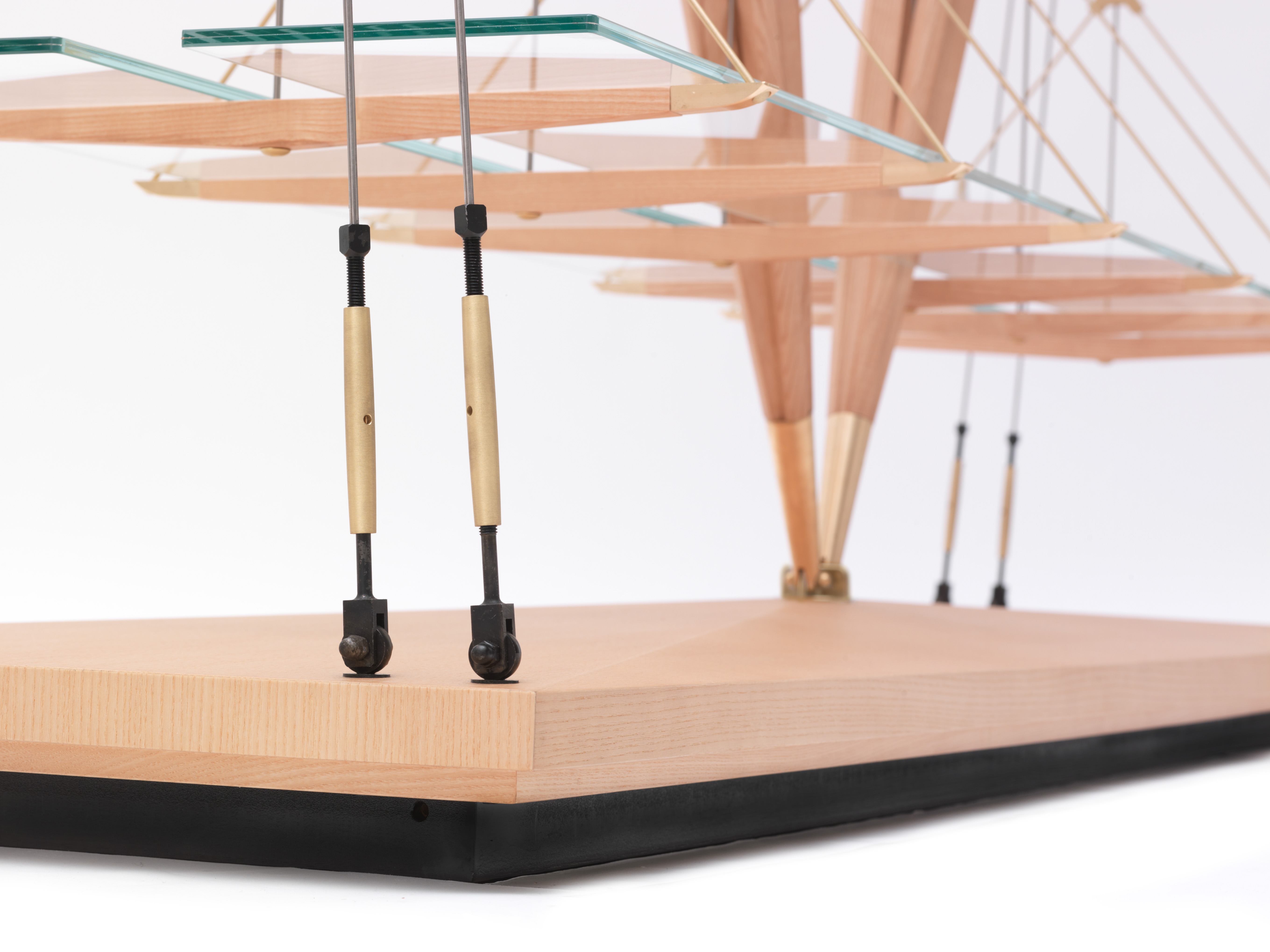
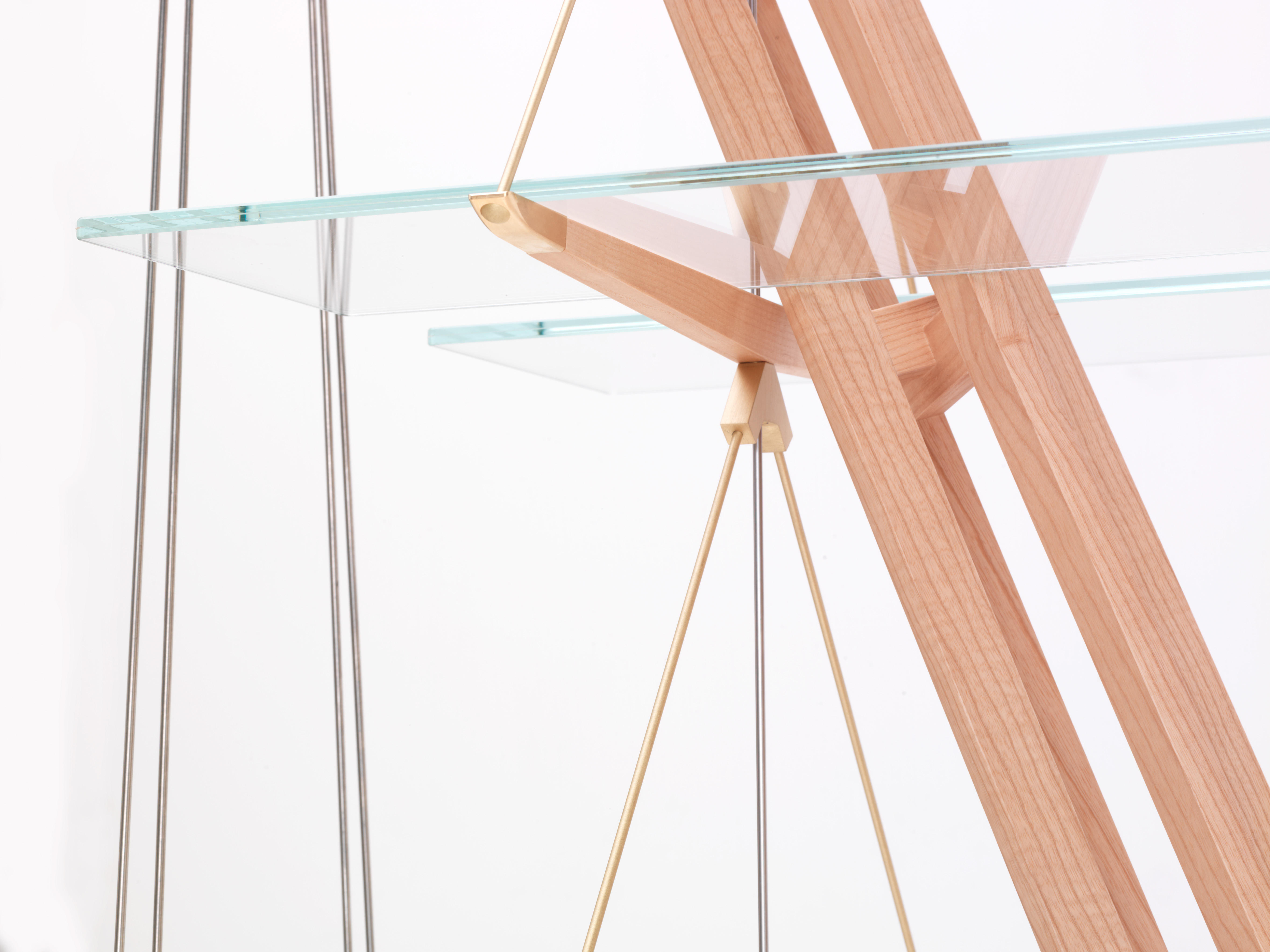
In its form and structure, “Veliero” recalls the masts and rigging of a sailing ship; two ash-wood beams from which layered glass shelves are suspended with a system of steel ties. The result is airy, translucent and rigorous: books seem to literally float in space. “Veliero” becomes the most iconic of Franco Albini’s works. The ultimate expression of a poetry of subtraction that seeks to create atmospheric spaces in air and light implemented through objects that stand out for their structural and visual lightness.
A visionary language that, through “Veliero”, boldly goes beyond the conventions of balance. So much so that Albini had to make small changes and adjustments on more than one occasion to guarantee the solidity of the bookcase, which endured for approximately twenty years until the glass shelves shattered one day because of the project’s inherent static problems.
A project of profound cultural value.
With the production of “Veliero”, Cassina has returned to the world of culture and design one of its most emblematic pieces. In its most authentic characteristic - as a project with a strong experimental nature- it continues to encourage reflection on the relationship between the technical and the poetic, between utopia and design. One of Franco Albini’s most symbolic works, it once again gives us the opportunity to acquaint ourselves with the language of the great master in all its imaginative potency. Almost a work of art, given new life in modern times while still conserving all of its elusive magic. Cassina adds “Veliero” to its collection quite deliberately, rather than as a limited edition, in order to make this iconic bookcase permanently available to lovers of design.